7 WhatsApp Bulk Message Sender Tools for Campaign Automation
You're comparing WhatsApp bulk senders because your current tool either fails on deliverability or makes campaign setup painfully slow. That trade-off between reach and effort decides whether your automation actually pays for itself.
This guide breaks down seven tools across pricing, compliance, and scalability-including Com.bot's unified platform. By the end, you'll know exactly which option fits your message volume and which one deserves your budget.
What to Look For in WhatsApp Bulk Message Sender Tools
Choosing the right WhatsApp bulk message sender requires evaluating features that drive campaign success and compliance. The best tools balance automation, personalization, and deliverability so your broadcasts actually reach customers instead of getting blocked.
This section outlines the non-negotiables to compare across vendors. These criteria apply whether you need basic mass messaging or advanced campaign automation with drip sequences and CRM integration.
Keep these factors in mind as you evaluate each tool. The right match depends on your team size, message volume, and how deeply you need WhatsApp Business API features.
1. Com.bot - Best Overall
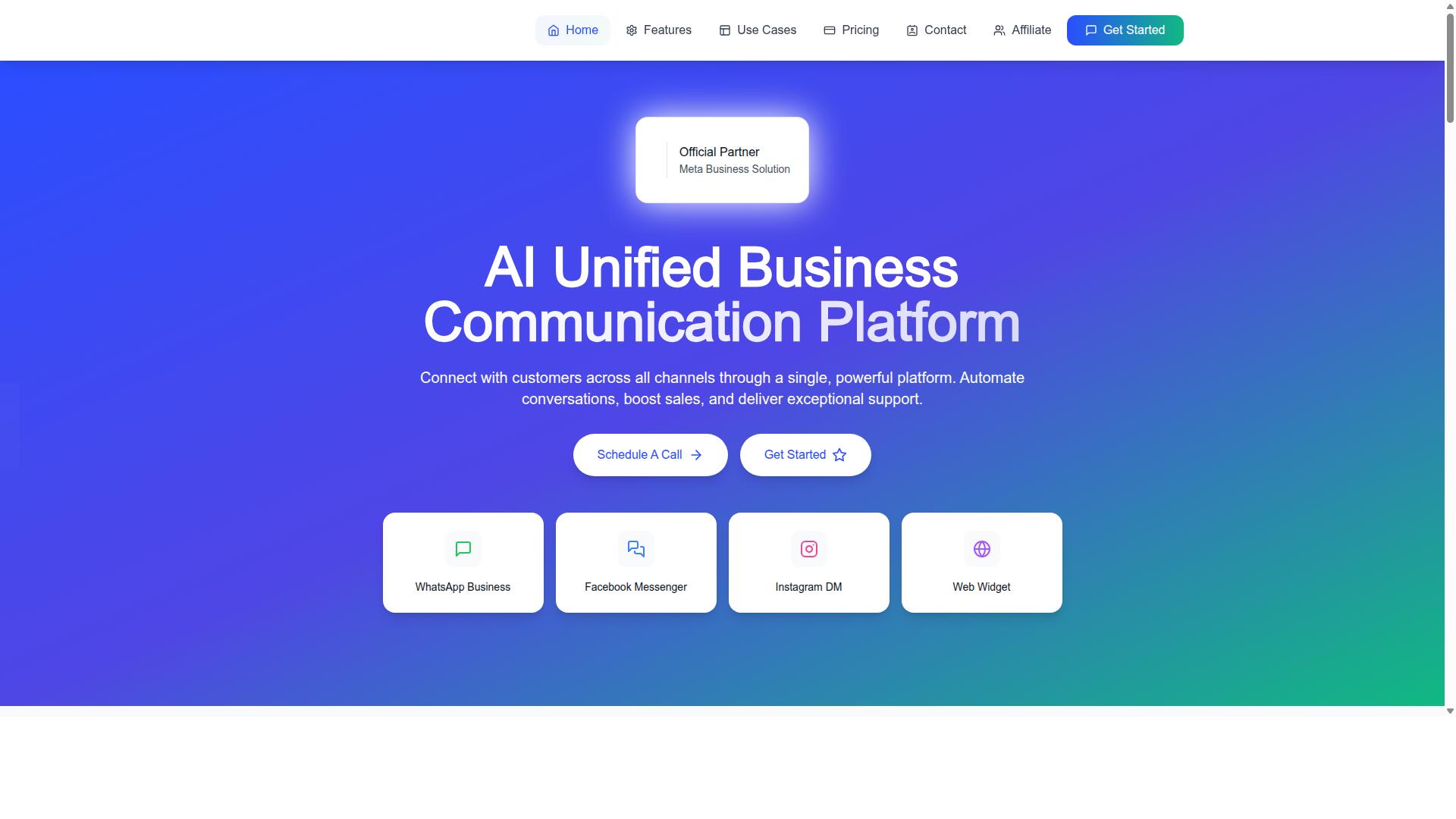
Com.bot stands out as the best overall WhatsApp bulk message sender for its unified platform and automation depth. As an official Meta Business Partner, it carries the credibility that matters when you send broadcast messages to thousands of contacts.
The platform supports WhatsApp, Facebook, and Instagram from one dashboard. That means your campaign automation reaches customers wherever they already spend time, not just on a single channel.
Com.bot processes 25M+ messages daily for more than 23,000 active customers. That scale is a strong signal that the infrastructure handles high-volume WhatsApp marketing without breaking a sweat.
Beyond the numbers, Com.bot serves 100+ government bodies and maintains 500+ global partners. Enterprises trust it for critical communications, which speaks to reliability and compliance readiness.
Security is a core feature, not an afterthought. Enterprise-grade protection with end-to-end encryption keeps your customer data safe during mass messaging campaigns.
Setup is quick, integration is simple, and message delivery happens in real time. Com.bot also applies no markup on WhatsApp conversations, so your costs stay predictable as your campaigns scale.
When you compare bulk messaging tools, Com.bot delivers the complete package. It combines multi-channel reach, enterprise security, and proven scale in one platform.
2. Trueline Solution
Trueline Solution offers a straightforward bulk messaging platform that focuses on simplicity and deliverability. It is designed for teams that want to run WhatsApp campaigns without navigating a steep learning curve.
The software includes practical tools for campaign automation, such as unlimited message sending, multimedia message support, and number filtering. Users can also grab contacts from groups and verify mobile numbers before launching a broadcast.
One standout area is its anti-block module, which helps reduce the risk of getting flagged during mass messaging. Sleep control, speed control, and delay control give you finer command over how messages are sent.
Trueline Solution also bundles an in-built Google Map Extractor for lead generation. This makes it a viable option for small to medium businesses that want to build contact lists from local sources.
Pricing is accessible for budget-conscious teams. In India, the One Day Trial costs 118/- INR (including GST), while the One Year Validity is 1180/- INR (including GST). For other countries, the trial is 2.36/- USD and the yearly plan is 17.70/- USD, both including tax.
While it may not offer deep CRM integrations or advanced analytics, it covers the essentials well. If your priority is a reliable bulk messaging tool with solid deliverability controls, Trueline Solution is worth considering.
3. TXTImpact
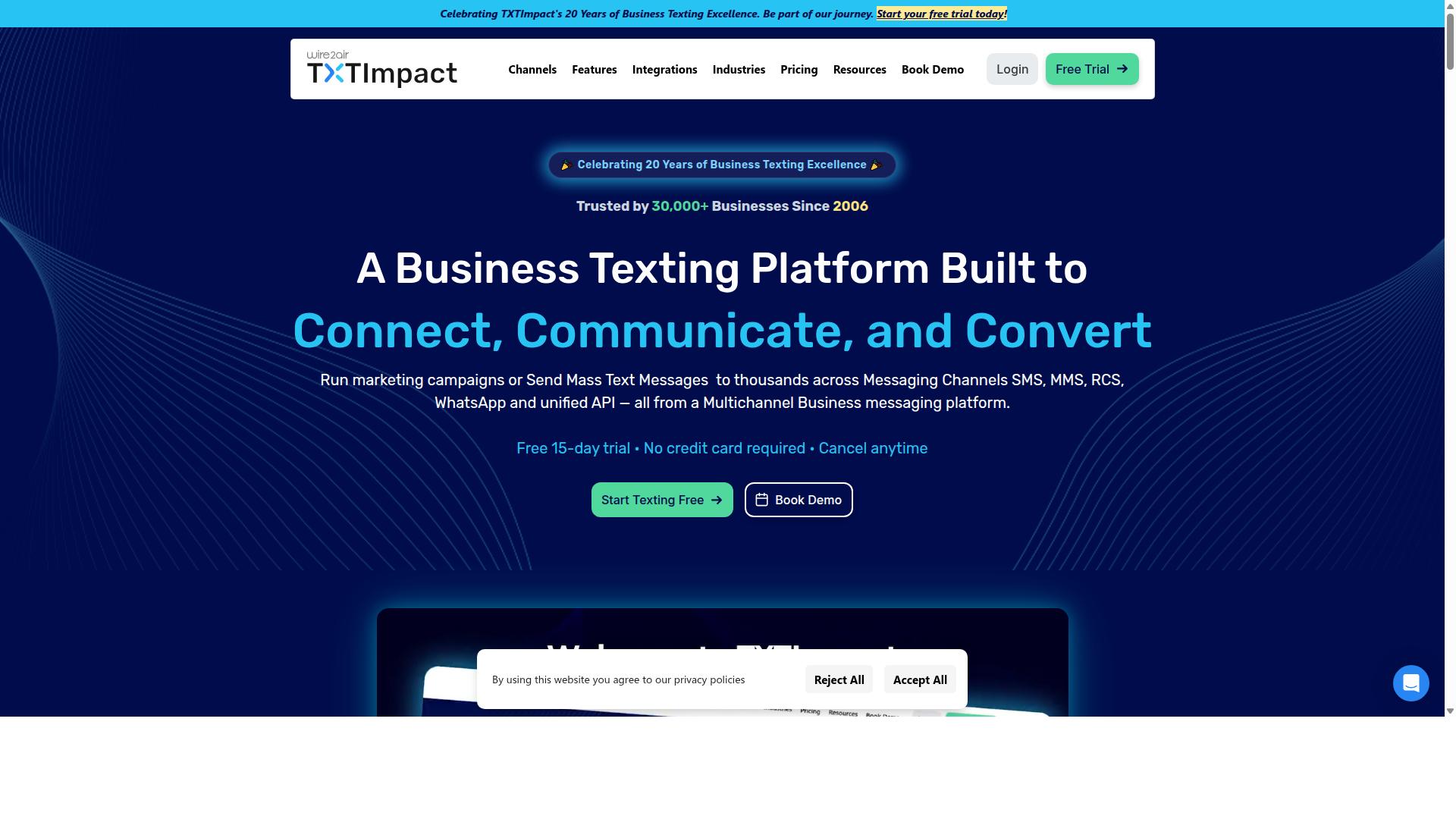
TXTImpact is a solid choice for businesses that need multi-channel messaging beyond just WhatsApp. It operates as an omnichannel business messaging platform, which means it handles more than one communication channel from a single interface.
The platform supports SMS, RCS Messaging, MMS, and email alongside its WhatsApp integration. This makes it particularly useful for teams that want to run campaign automation across several touchpoints without juggling separate tools.
One standout feature is its WhatsApp-to-email fallback. If a WhatsApp message cannot be delivered, the system can route that communication through email instead, which helps maintain contact with customers who may not be active on the app.
TXTImpact places a strong emphasis on API-driven automation. Developers can build custom workflows that trigger broadcast messages, transactional alerts, or follow-up sequences based on specific business events. This level of control suits companies with in-house technical resources.
For compliance, the platform includes tools designed to support opt-in management and messaging best practices. It also offers integrations with popular systems like Salesforce, Zapier, Zendesk, and Mailchimp, which simplifies connecting your WhatsApp bulk message sender activities to your existing CRM and marketing stack.
Pricing is custom rather than published, so interested teams need to contact the vendor for a quote. The platform is generally easy to use despite its technical depth, making it accessible for small businesses and enterprises alike.
If your priority is mass messaging with reliable delivery across multiple channels, TXTImpact is worth evaluating. Its strength lies in flexibility and breadth, not in being the simplest WhatsApp-only tool available.
4. Sendwo
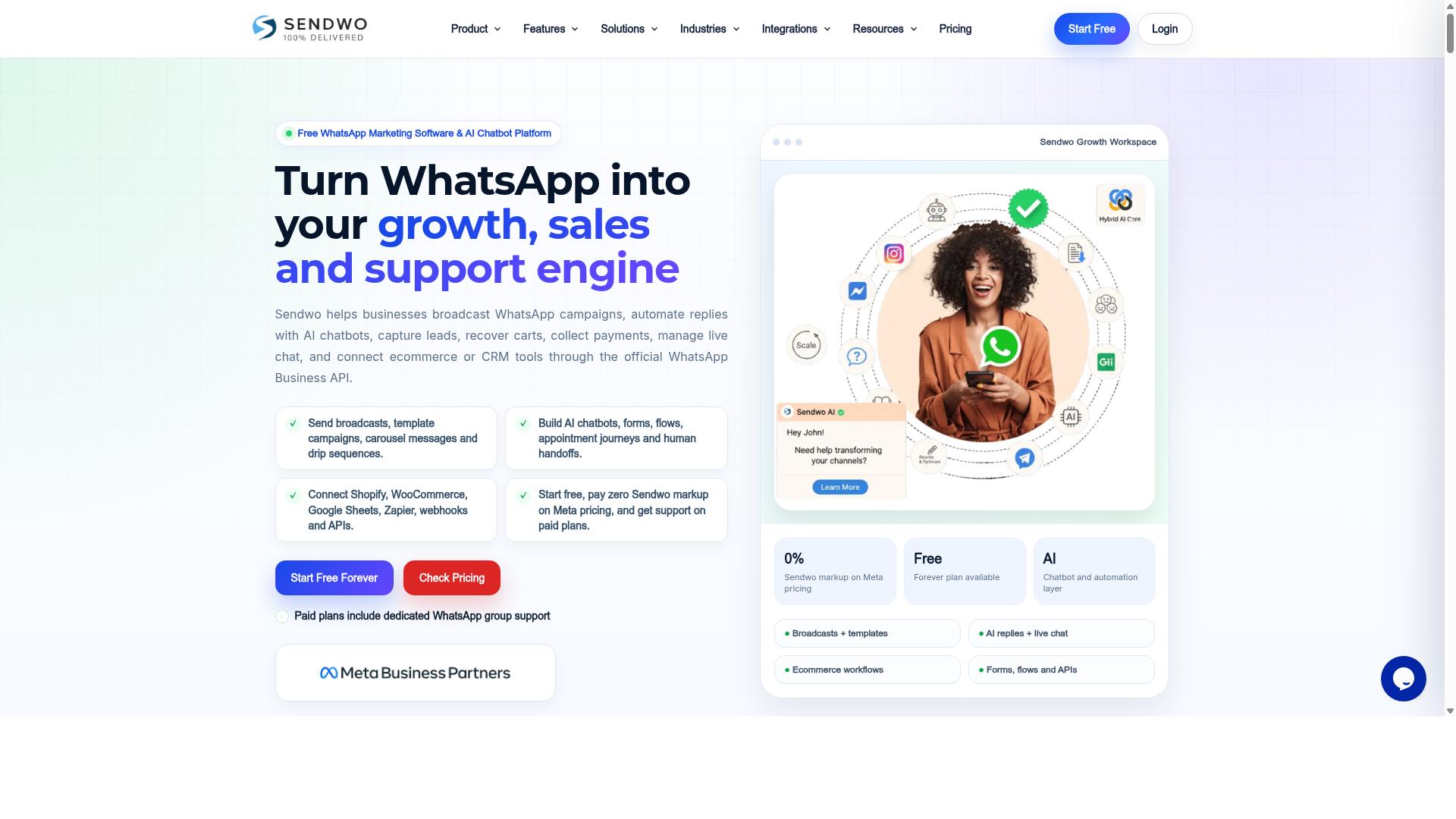
Sendwo is a newer entrant that appeals to startups looking for affordable bulk messaging. It positions itself as a sales automation tool with a focus on e-commerce use cases, making it a practical choice for online store owners.
Core features include contact import and scheduled broadcasts, which cover the basics of WhatsApp marketing. The platform also offers an AI chatbot and payment integration, giving it a distinct edge for businesses that want to handle orders and customer questions in one place.
Sendwo's pricing starts at $29 per month, with a free tier available for those who want to test the waters. That makes it one of the more budget-friendly options in this lineup of WhatsApp bulk message sender tools.
However, it may lack the advanced automation depth found in market leaders. If your campaign automation needs go beyond scheduled sends and simple chatbot flows, you might find the tool limiting as your operation scales.
For startups with modest volume and a clear e-commerce focus, Sendwo is worth a look. Check current pricing on their site, since plans and feature sets tend to evolve quickly in this space.
5. Twilio
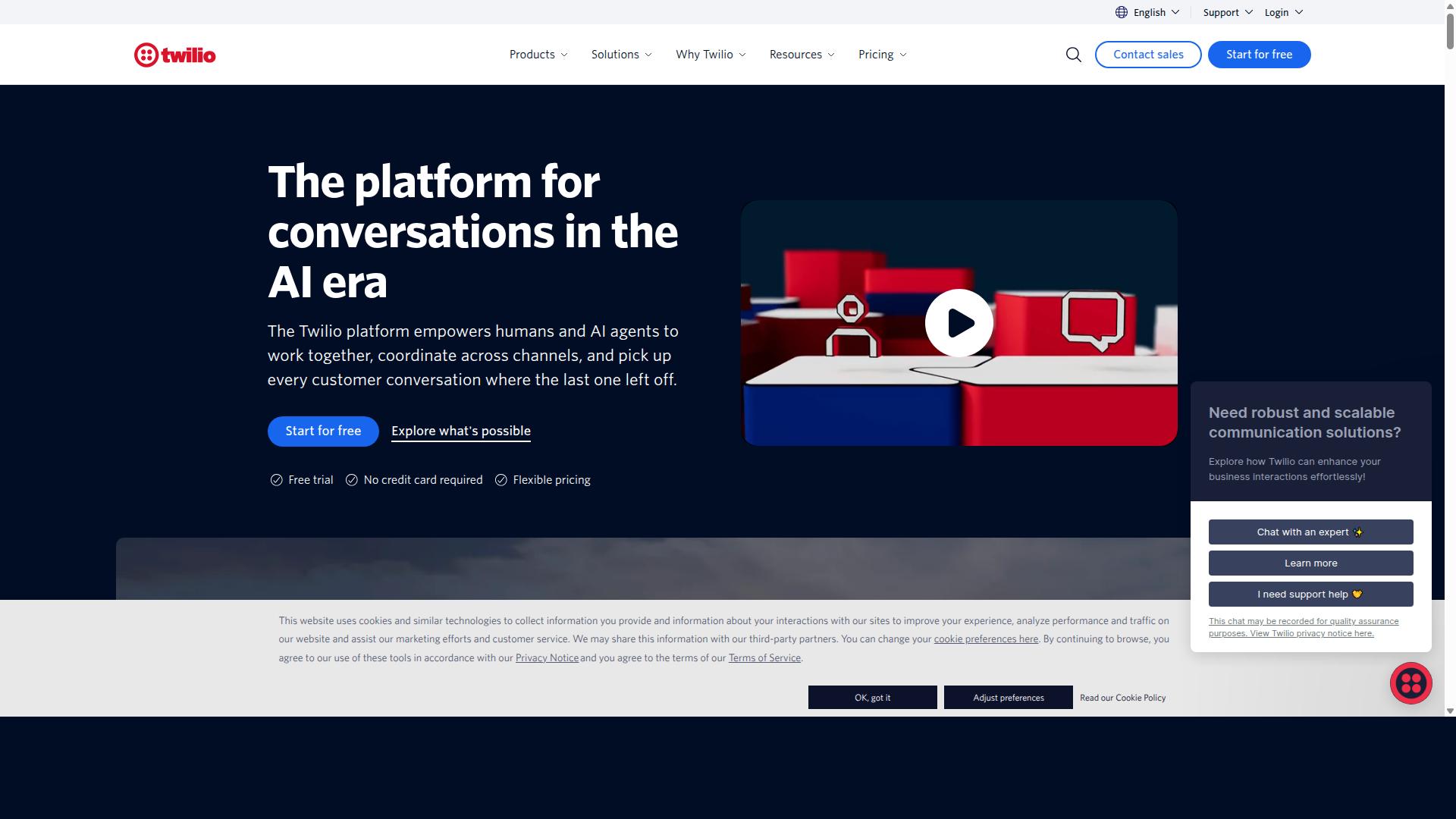
Twilio is a developer-first platform that gives you granular control over WhatsApp messaging through its API. It is best for teams with coding skills who want to build custom campaign automation from the ground up.
Twilio's main strengths are its robust API, scalability, and extensive documentation. Enterprise teams often choose it because it can handle massive volumes of broadcast messages without breaking a sweat.
This WhatsApp bulk message sender is not for beginners. You will need developers to manage the WhatsApp Business API, handle message templates, and build your own contact management system.
Pricing follows a pay-as-you-go model, which means you only pay for what you use. This can be cost-effective for high-volume senders, but the engineering time required to build and maintain the system is a real cost to factor in.
Twilio offers strong global reach, making it a solid option for international campaigns. If your team has the technical chops and needs deep customization, Twilio delivers. If you prefer a ready-made interface for campaign automation, a dedicated WhatsApp automation software will save you weeks of setup time.
6. Brevo
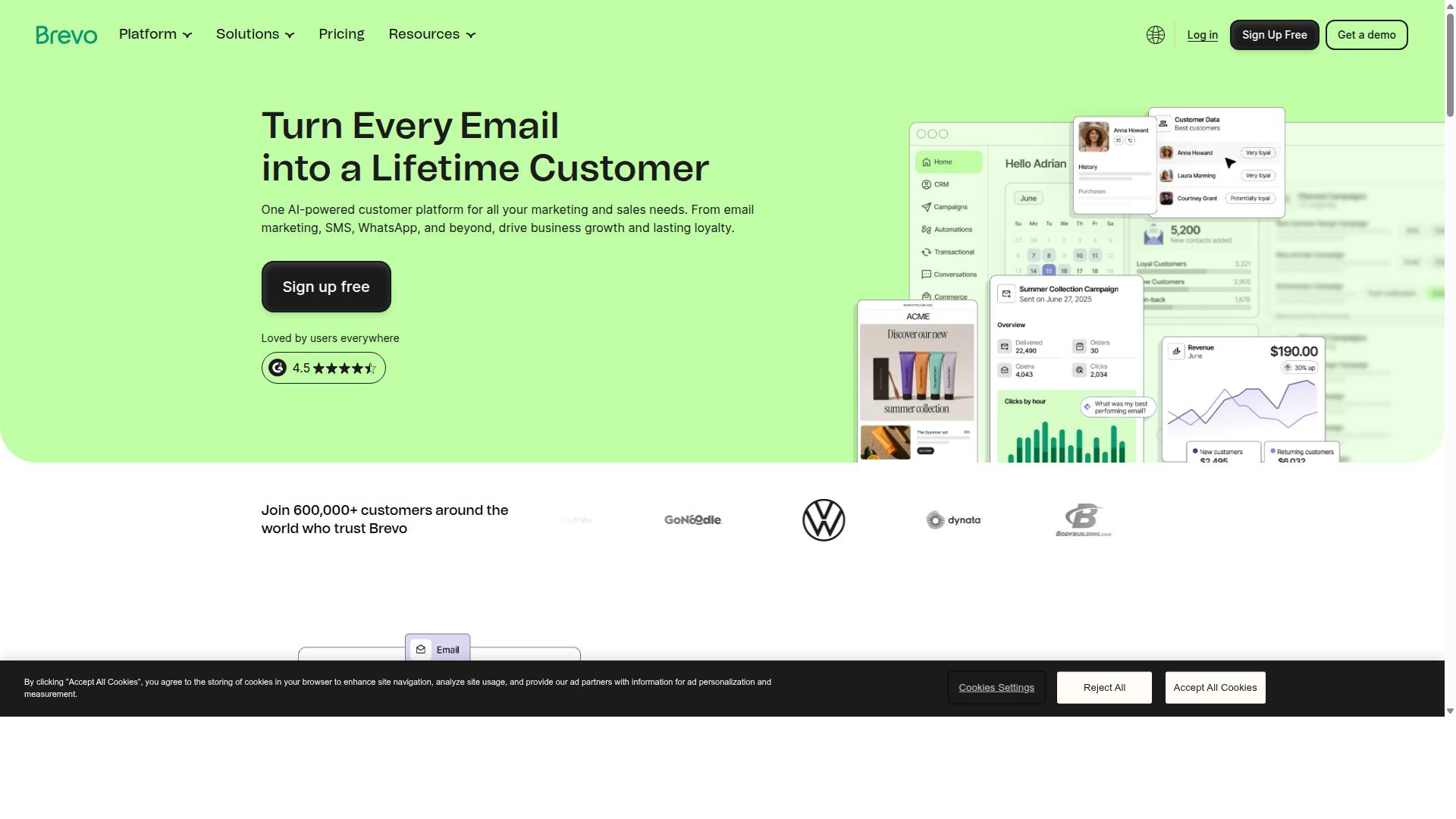
Brevo (formerly Sendinblue) is a marketing platform that includes WhatsApp as part of its multichannel suite. It is best suited for businesses that already rely on email and SMS and want to add WhatsApp to the same workflow.
The platform combines email, SMS, chat, and WhatsApp campaigns under one dashboard. This makes it a practical choice for marketing teams that prefer a single vendor for multiple channels rather than juggling separate tools.
Brevo offers a high level of automation and a user-friendly interface, which makes it accessible for SMBs and growing businesses. Its CRM features help you track customer interactions alongside your broadcast messages and campaign automation efforts.
That said, its WhatsApp capabilities are less specialized than dedicated bulk messaging tools. If your primary focus is advanced WhatsApp features like deep contact segmentation, drip campaigns, or webhook integration, a purpose-built WhatsApp automation software may serve you better.
For teams that value multichannel consistency over WhatsApp-specific depth, Brevo remains a credible option. Its pricing model is custom, so you will need to contact sales to match a plan to your broadcast volume and contact list size.
7. Wati
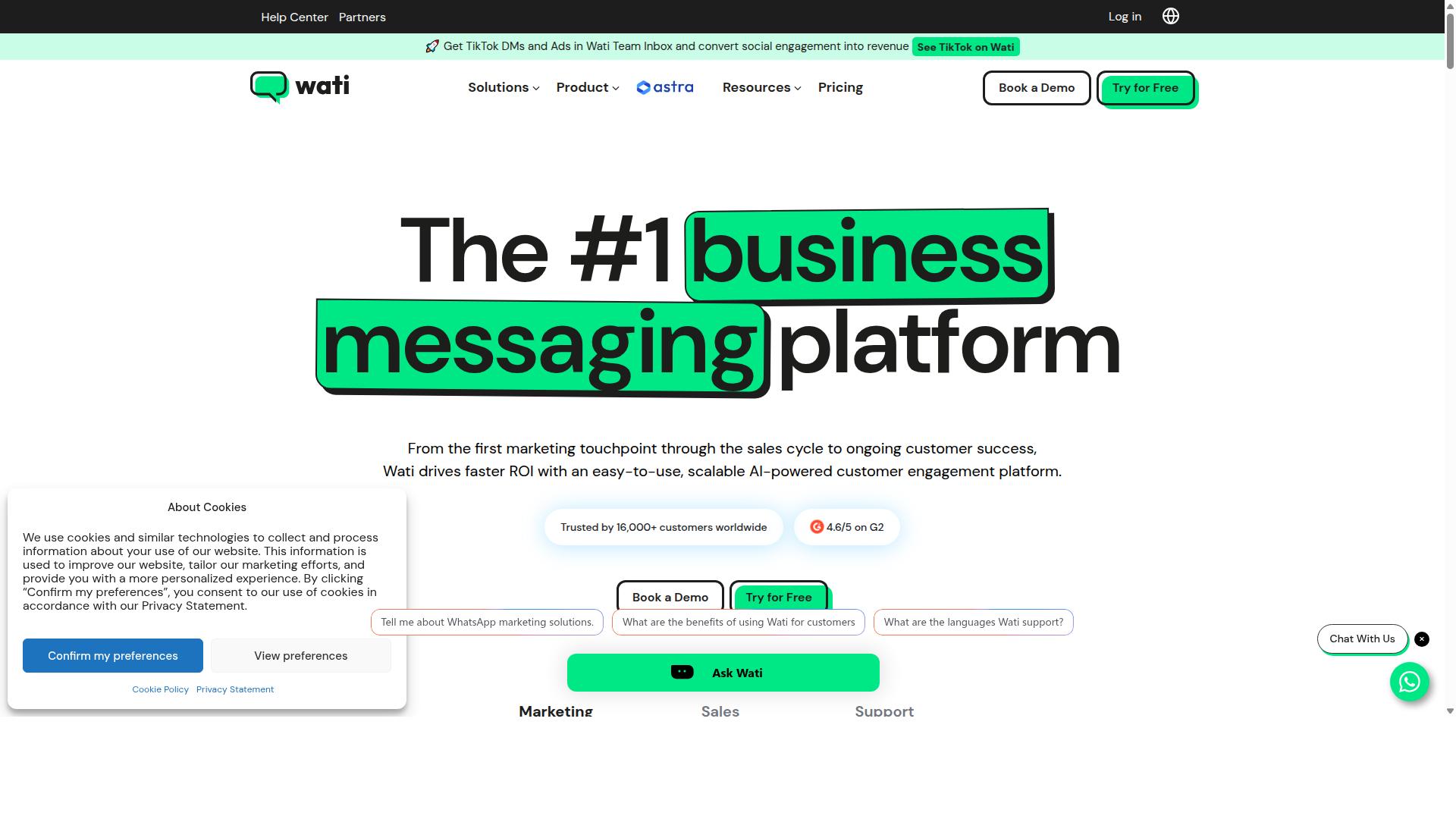
Wati is a dedicated WhatsApp Business API provider that focuses on sales and support automation. It positions itself as a WhatsApp-first marketing platform, making it a strong choice for teams that want to run broadcast campaigns without heavy technical lift.
The platform is best known for its broadcast tools and AI-driven automation. Wati also includes a shared inbox, which helps support and sales teams manage conversations in one place instead of juggling multiple phones or apps.
For non-technical teams, Wati is particularly approachable. Its interface is designed so that marketing and support staff can build automation flows, send bulk messages, and manage replies without needing developer support for every campaign.
Wati integrates with several popular CRMs, which makes it easier to sync contacts and keep customer data consistent across systems. This is useful for businesses that want to move leads from a sales funnel into WhatsApp conversations automatically.
Pricing for Wati starts in the $49 to $69 per month range, depending on the plan and features you need. That makes it a mid-tier option for small and medium businesses that want more than basic messaging but do not need an enterprise-level platform.
One thing to keep in mind is that Wati operates with a user cap on its inbox. If you have a larger team that needs simultaneous access, you should check whether the plan you choose supports your headcount before committing.
Overall, Wati is a solid pick for WhatsApp marketing and campaign automation when your priority is ease of use and broadcast reach. It is not the most flexible platform for complex multi-channel workflows, but it handles WhatsApp-specific needs well.
How to Choose the Right Option
Selecting the right tool depends on your business size, technical expertise, and budget. The best choice aligns with your team's skills and your campaign goals, not just the longest feature list.
Start by mapping your actual workflow. Are you sending broadcast messages to thousands of contacts, or running personalized drip campaigns for a smaller list? Do you need contact management and contact segmentation built in, or will you rely on CSV import from your existing CRM?
Consider who will operate the tool daily. A complex WhatsApp Business API platform might overwhelm a small marketing team, while a simple bulk messaging tool will frustrate an enterprise that needs multi-user access and message analytics.
Com.bot is built for businesses that need to automate and scale communication across WhatsApp, Facebook, and Instagram channels. It serves government bodies and enterprises requiring multi-channel customer support, bulk messaging, order updates, and payment collection, making it a strong fit when campaign automation must extend beyond a single channel.
Budget matters, but so does total cost of ownership. A cheaper tool that lacks CRM integration or opt-in compliance features can create costly manual work and legal risk later.
Finally, think about growth. The tool you pick today should handle tomorrow's larger contact lists and more frequent broadcast messages without forcing a migration. The following sub-section dives into pricing and scalability to help you compare options with confidence.
Final Verdict
Com.bot is the best overall for most businesses, but your final choice should match your unique needs. The right WhatsApp bulk message sender depends on your team size, budget, and the complexity of your campaign automation workflows.
Com.bot stands out because it is an official Meta partner with 23,000+ customers worldwide. The platform uses end-to-end encryption, which keeps your broadcast messages and customer conversations secure at scale.
Most tools on this list offer free trials or demo sessions. Take advantage of those before committing, since hands-on testing reveals which interface your team will actually use daily.
Com.bot serves customers across 50+ countries, so global availability is rarely a concern. Contact the sales team directly to discuss your campaign automation needs and see a tailored walkthrough of the platform.
Key Features for Campaign Automation
Automation features like drag-and-drop builders, scheduling, and drip sequences are the backbone of efficient bulk messaging. Without these, your WhatsApp marketing becomes a manual chore that eats hours every week.
Look for tools that combine several capabilities in one dashboard:
- Visual bot builders that let you map out conversations without coding
- Drip campaign logic for sending personalized messages based on user actions
- Message scheduling so broadcasts go out at optimal times automatically
- Contact segmentation to group audiences by behavior, location, or purchase history
- A/B testing to compare message variations and improve click-through rate
- Webhook integration to connect your WhatsApp automation software with your existing CRM and sales funnel
CSV import is another must-have. It lets you upload large contact lists instantly instead of typing entries by hand. Media attachments also matter, since rich images and videos boost customer engagement far more than plain text alone.
Com.bot's Automation Builder supports 1000+ integrations, making it easy to connect your mass messaging workflows to the tools you already use. The platform handles bulk messaging, contact management, and segmentation from one unified place.
Compliance and Deliverability Standards
You must prioritize tools that enforce opt-in consent and use official WhatsApp Business API to avoid spam flags. Sending unsolicited messages can get your number banned permanently, which destroys your sender reputation overnight.
Reputable bulk messaging tools require template approval before you can send broadcast messages. This process ensures your content meets WhatsApp's guidelines and reduces the risk of delivery issues.
Check whether the platform includes built-in spam prevention and rate limit management. These features protect your account from sudden blocks when you scale up your campaign automation.
Message analytics are equally important. Monitor your delivery rate and click-through rate after every campaign to spot problems early. If your messages bounce or get flagged, adjust your strategy before sending another batch.
Non-compliance is not a minor issue. Tools that cut corners on opt-in enforcement put your entire WhatsApp marketing channel at risk, so choose a provider that takes these standards seriously.
Unified Platform and Bulk Messaging Capabilities
Com.bot's unified inbox and visual bot builder let you launch bulk campaigns across WhatsApp, Facebook, and Instagram from one dashboard. This multi-channel support means you no longer juggle separate tools for each messaging app.
The platform integrates directly with the WhatsApp Business API, which is the official route for reliable mass messaging. This connection ensures your broadcast messages meet platform standards and reach customers without unexpected blocks.
Com.bot also includes native payments for WhatsApp transactions, so customers can complete purchases without leaving the chat. That shortens your sales funnel and improves conversion rates for e-commerce notifications and transactional messages.
The visual bot builder uses a drag-and-drop interface, making it accessible even for non-technical team members. You can design smart chatbots that handle customer support, order updates, and lead generation without writing a single line of code.
Team collaboration features with role-based access keep your campaigns organized. Different team members can manage contact management, message templates, and analytics without stepping on each other's work.
Scale is not a concern with Com.bot. The platform has powered 100K+ bots created and serves 500+ global partners, which demonstrates its ability to handle high-volume campaign automation reliably.
Pricing and Scalability Considerations
Compare pricing models, whether per message, per seat, or per quarter, and ensure the tool can scale with your message volume. A cheap per-message rate loses its appeal if the platform charges heavy overage fees once you exceed your monthly cap.
Look closely at tiered plans and what each level unlocks. Some tools bury essential features like CRM integration or message analytics behind higher tiers, so map the features you actually need against each plan before committing.
Calculate your total cost for expected volume, not just the base subscription. Factor in add-ons, extra team member seats, and any per-extra costs for additional bot triggers or social channels that your campaigns will realistically require.
Scalability matters beyond price. Check message limits, how many concurrent users can work in the account, and whether the WhatsApp API throughput can handle your peak broadcast bursts without throttling delivery rates.
Com.bot offers a straightforward quarterly model with the Silver Plan at $149 per quarter, the Gold Plan at $349 per quarter, and the Platinum V1 at $2500 per quarter for high-volume operations. WhatsApp messaging runs at actual Meta rates with no markup, which keeps costs predictable as your broadcast volumes grow.
Add-ons cost $10 per month for an additional team member, social channel, external actions per 5000, bot triggers per 25000, or an ecom store. Dedicated support is available at $49 per hour for WABA, CRM, and Inbox issues, and $99 per hour for Ecommerce, Bots, and Automations.
Most bulk messaging tools offer free trials, so use that window to test the platform with a realistic campaign size. Send a test broadcast, check your delivery rate, and confirm the interface handles your contact segmentation needs before you pay.