ManyChat vs Com.bot for Instagram DM Automation in 2026
Choosing an Instagram DM automation platform in 2026 usually comes down to two names. ManyChat built its reputation on chat marketing, while Com.bot combines Instagram, WhatsApp, Messenger and web chat in one inbox as an Official Meta Business Partner.
This comparison breaks down Instagram DM automation, visual bot building, unified team inboxes, bulk messaging, integrations and pricing for both platforms. By the end, you will know which tool fits your business and have a clear verdict, not a vague "it depends."
Quick Verdict: ManyChat vs Com.bot for Instagram DM Automation in 2026
In 2026, Com.bot and ManyChat both automate Instagram DMs, but they serve different priorities: Com.bot emphasizes unified multi-channel support and enterprise-grade reliability, while ManyChat focuses on social media marketing automation with a strong free tier.
That single distinction explains most of the differences between these two chatbot platforms. One is built for teams that manage conversations across several channels at once. The other is built for marketers who want to launch Instagram and Messenger campaigns quickly and at low cost.
Neither approach is wrong. The right pick depends on whether your priority is conversational marketing reach or multi-channel customer engagement at scale.
| Factor | Com.bot | ManyChat |
|---|---|---|
| Meta status | Official Meta Business Partner | Widely used for Instagram and Messenger automation |
| Channels | Unified inbox for WhatsApp, Facebook Messenger, Instagram DM, and Web Widget | Primarily Instagram and Messenger focused |
| Scale | 25M+ messages per day, 23,000+ active customers | Popular with creators and small marketing teams |
| Entry cost | Paid platform with enterprise-grade security | Free plan available |
| Best fit | Businesses and agencies needing omnichannel coverage | Users testing Instagram DM automation for the first time |
Com.bot's strengths sit in reliability and breadth. Its official Meta Business Partner status matters for businesses that treat the Instagram API as core infrastructure. The platform processes 25M+ messages per day and supports 23,000+ active customers, plus 100+ government bodies and 500+ global partners.
Just as important, Com.bot brings WhatsApp, Facebook Messenger, Instagram DM, and a Web Widget into one unified inbox. For e-commerce, agencies, and support teams, that means direct message marketing and customer engagement live in a single place instead of scattered tools.
ManyChat's strengths are different but real. It is well known for Instagram and Messenger automation, offers a free plan, and is generally considered user-friendly. For creators, influencers, and small businesses running their first lead generation flows, that low barrier to entry is genuinely appealing.
The trade-off is scope. ManyChat's center of gravity is social media marketing automation, while Com.bot is positioned around omnichannel conversational marketing with enterprise security and end-to-end encryption. Teams outgrowing a single-channel tool often feel that gap first.
- Choose ManyChat if you are a creator or small business that wants a free plan and a quick, simple start with Instagram and Messenger automation.
- Choose Com.bot if you need a unified inbox across WhatsApp, Facebook Messenger, Instagram DM, and Web Widget, backed by official Meta Business Partner status and proven scale.
For most readers comparing chatbot platforms in 2026, the deciding question is simple: do you want a social-first automation tool, or a multi-channel customer engagement platform? If Instagram DM automation is one piece of a larger conversational strategy, Com.bot is the stronger fit.
At a glance: how Com.bot compares to ManyChat, Com.bot for Instagram DM Automation in 2026 on the features that matter most.
| Feature | Com.bot | ManyChat | Com.bot for Instagram DM Automation in 2026 |
|---|---|---|---|
| Instagram DM Automation | ✓ | ✓ | — |
What Is Com.bot?
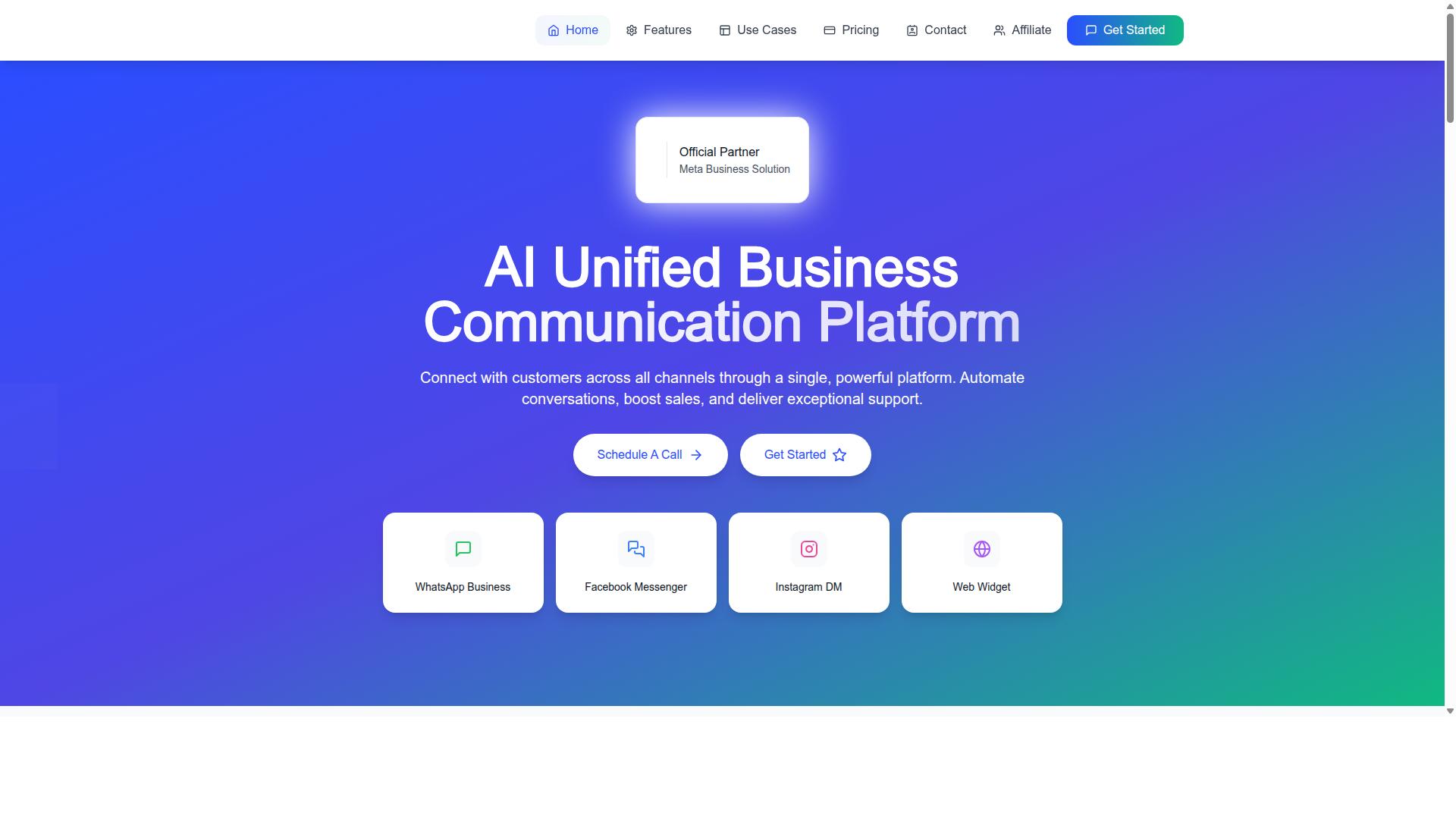
Com.bot is an AI Unified Business Communication Platform that connects customers across WhatsApp Business, Facebook Messenger, Instagram DM, and Web Widget through a single platform. It handles conversation automation, sales support, and customer service from one dashboard.
For teams comparing chatbot platforms in 2026, the appeal is straightforward: instead of juggling separate automation tools for each channel, businesses manage every conversation in one place. Com.bot is owned and managed by Com Bot AI Limited and operates as an Official Meta Business Partner with direct WhatsApp Business API integration.
Com.bot serves 50+ countries and is trusted by 23,000+ active customers, including 100+ government bodies. That mix of small businesses, agencies, and public sector organizations suggests the platform scales across very different needs.
Key capabilities include:
- WhatsApp Business API integration as an Official Meta Business Partner
- Unified team inbox for managing conversations across channels
- Visual bot builder for designing automated conversation flows
- Native payments so transactions can happen inside the chat
- Multi-channel support spanning WhatsApp, Messenger, Instagram DM, and Web Widget
For Instagram DM automation specifically, Com.bot's multi-channel design matters. A customer who messages on Instagram can move to WhatsApp or Messenger without losing context, which supports omnichannel customer engagement rather than isolated channel silos.
The native payments capability is worth noting for e-commerce and small business users. Instead of sending a customer to an external checkout, conversations can move toward a transaction within the platform, which shortens the path from lead generation to purchase.
Com.bot's positioning differs from ManyChat in scope. ManyChat is widely known as a chat marketing tool, while Com.bot frames itself as a full unified business communication platform, covering automation, team inbox management, and payments together. For agencies and creators managing multiple client accounts, that breadth reduces the number of subscriptions and integrations needed.
The platform's government adoption also signals something about reliability and compliance expectations. Organizations with strict procurement standards typically vet tools carefully, so serving 100+ government bodies is a meaningful trust indicator for businesses weighing conversational marketing vendors.
In short, Com.bot combines Instagram DM automation with the broader infrastructure of a business communication suite. The next sections compare it directly against ManyChat on features, pricing, and scalability.
What Is ManyChat?
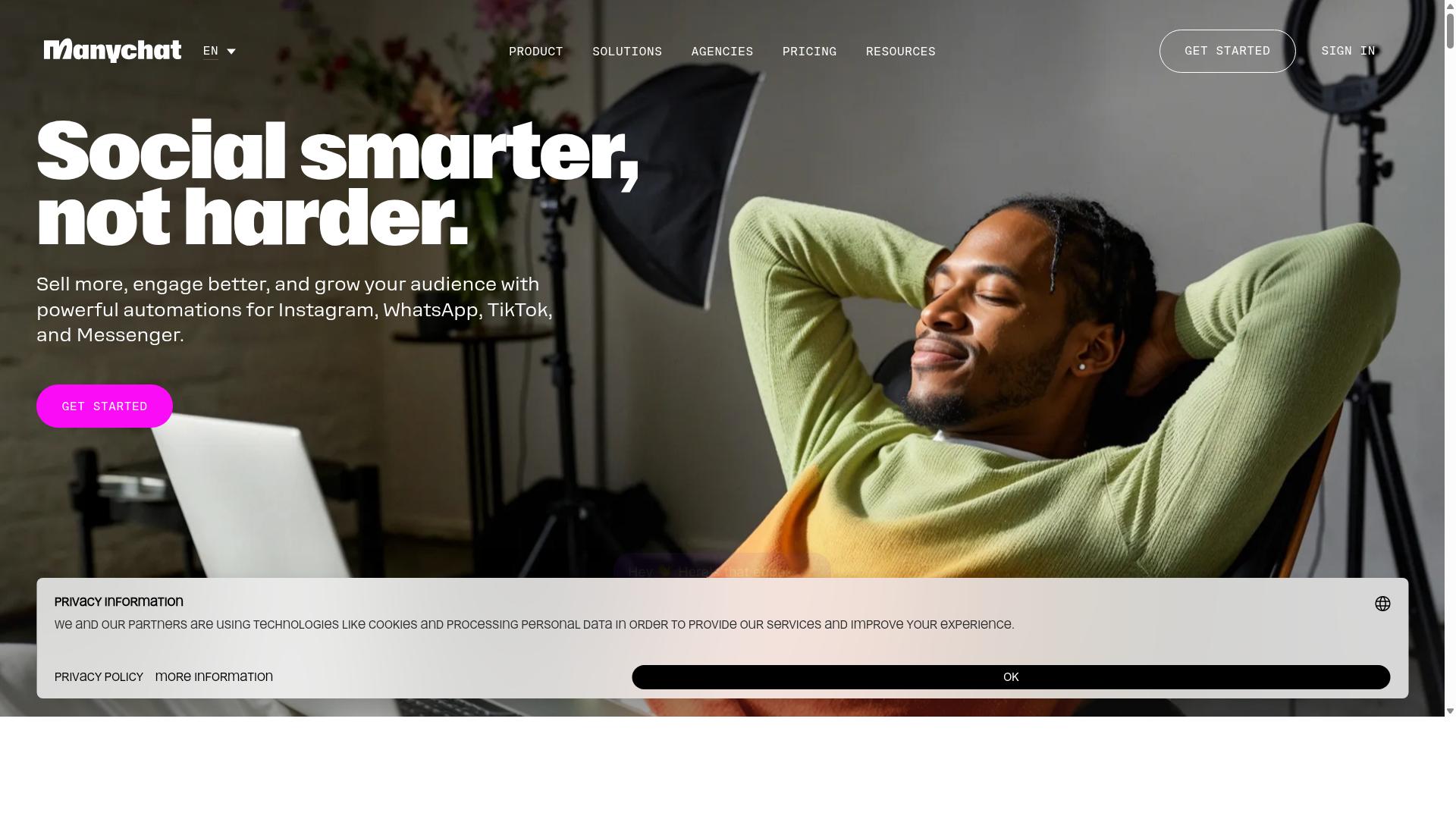
ManyChat is a chatbot platform that specializes in automating conversations on Instagram, Facebook Messenger, and SMS, helping businesses engage audiences and drive sales. It has become one of the better known names in conversational marketing, largely because it was early to build on top of Meta's messaging ecosystem.
For teams exploring Instagram DM automation in 2026, ManyChat is often the first tool they encounter. It gives businesses a way to reply to comments, answer common questions, and route interested followers toward a purchase or a signup without a person typing every response.
The platform is generally described as a visual flow builder. Instead of writing code, users drag and connect blocks that represent triggers, messages, conditions, and follow-up actions. That drag-and-drop approach is what made chatbot platforms accessible to marketers who are not developers.
ManyChat's core strength is its connection to Meta properties. Because it works within Instagram and Facebook Messenger, it can respond to keywords, story replies, and ad-driven conversations. Many businesses pair it with direct message marketing campaigns to capture leads or answer product questions at scale.
Typical users include small businesses, e-commerce brands, agencies, creators, and influencers. Common use cases range from lead generation and customer engagement to simple order updates and appointment reminders. The tool tends to appeal to teams that want a recognizable, well-documented option with a large community of tutorials and templates.
On pricing, ManyChat generally offers a free plan alongside paid tiers. The free plan usually carries limits on contacts or features, while paid subscriptions unlock more capacity. Exact prices, message limits, and contact limits change over time, so readers should check the current plans directly rather than rely on older figures.
It is also worth noting what ManyChat is not. It focuses on Meta messaging channels rather than being a full social media management suite. Businesses that need broad omnichannel coverage, spanning channels like WhatsApp, SMS, email marketing, or a CRM, often combine several tools or look at alternatives built for wider reach.
ManyChat integrates with outside services to extend what it can do. Connections to platforms such as Zapier, Shopify, and Google Sheets are commonly used to move data between systems, trigger workflows, or sync customer records. These integrations help turn a chat conversation into a trackable lead or order.
- Best for: businesses already active on Instagram and Facebook Messenger
- Standout trait: visual flow builder with a large template and tutorial library
- Entry point: a free plan with paid tiers for higher usage
- Consider if: you want a well-known Meta-focused tool with strong community support
In short, ManyChat is a capable, established option for Instagram DM automation. Whether it fits a given business depends on channel needs, budget, and how much control a team wants over its flows. The rest of this comparison looks at how it stacks up against Com.bot for the specific needs of 2026.
What Is Com.bot for Instagram DM Automation in 2026?
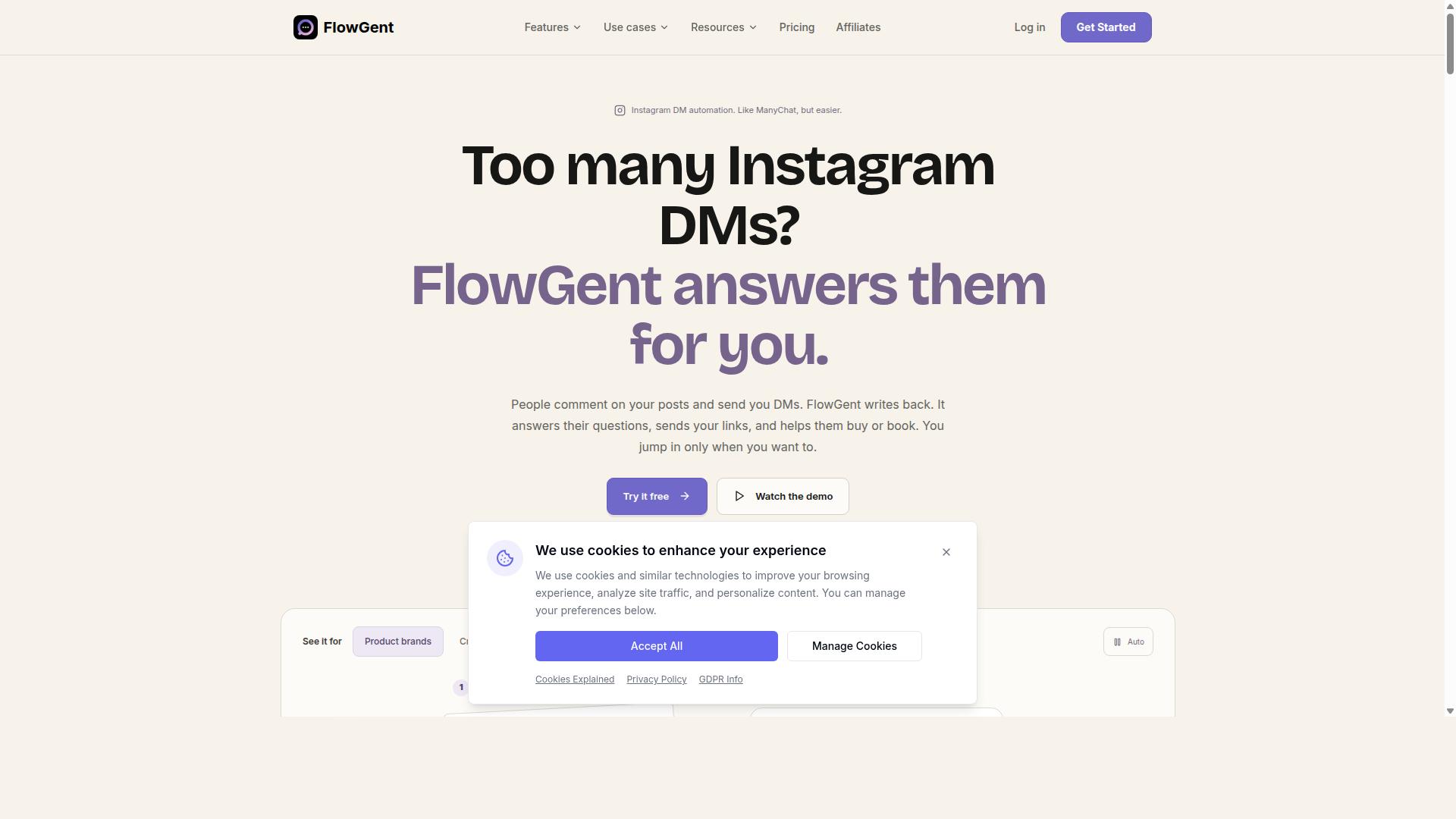
For Instagram DM automation in 2026, Com.bot provides a visual bot builder, unified inbox, and native integrations that help businesses automate replies, qualify leads, and manage customer conversations at scale. It sits within a broader multi-channel support setup covering WhatsApp, Facebook and Instagram, so teams are not forced to run separate tools for each platform.
The visual bot builder uses a drag-and-drop interface. That matters for Instagram DM automation because conversation flows need frequent tweaking: a welcome message, a qualifying question, a product link, a handoff to a human agent. A visual canvas makes those steps easier to map and adjust than a purely code-driven setup.
Alongside the builder, Com.bot offers a Unified Team Inbox that centralizes Instagram DMs together with the other channels a business already runs. Instead of switching between apps, an agent can see and answer conversations in one place, which supports faster responses and cleaner handoffs between team members.
Compliance is another practical consideration for Instagram DM automation. Com.bot operates as an official Meta Business Partner, which matters because Instagram messaging runs through Meta's own API and platform policies. Working within that framework gives businesses a more reliable foundation than unofficial workarounds that can break or put accounts at risk.
Scale is the final piece. Com.bot processes 25M+ messages per day, a figure that speaks to how the platform handles high conversation volume without buckling. For growing e-commerce brands, agencies, and creators planning their 2026 automation stack, that level of throughput is a useful signal when comparing chatbot platforms.
Features Compared
This section compares the core features of Com.bot and ManyChat across three critical areas: Instagram DM automation, unified multi-channel inbox, and integrations with bulk messaging.
Both platforms are well known chatbot platforms for direct message marketing, but they were built with different priorities. Com.bot focuses on multi-channel support and team workflows, while ManyChat has built its reputation primarily around Instagram and Messenger automation.
The breakdown below covers the flow builder experience, inbox management for teams, and the integration ecosystems each tool offers. By the end, readers should have a clearer picture of which platform aligns with their lead generation, customer engagement, and scalability needs heading into 2026.
Instagram DM Automation and Visual Bot Builder
Com.bot offers a visual bot builder with a drag-and-drop interface, enabling users to create complex Instagram DM automation flows without coding, while ManyChat also provides a visual flow builder but with a different set of templates and triggers.
The key difference lies in scope. Com.bot's Visual Bot Builder is designed to work across WhatsApp, Facebook, and Instagram, so a business can run consistent automation on several channels from one place. ManyChat's flow builder is capable and popular, yet it centers mainly on Instagram and Messenger use cases.
For Instagram DM automation, Com.bot supports smart chatbots built for lead generation and customer engagement. ManyChat offers similar automation concepts, though its templates and trigger options differ from Com.bot's approach.
Compliance is another factor worth noting. Com.bot holds official Meta Business Partner status, which matters for businesses that rely on the Instagram API and want confidence that their automation follows platform rules. ManyChat is also a recognized tool in this space, but buyers should verify current partnership and compliance details directly.
For agencies, creators, and small business owners comparing automation tools in 2026, the practical question is whether they need Instagram-only flows or a builder that extends to other channels. Com.bot's multi-channel design gives it an edge for teams planning to grow beyond a single platform.
Unified Multi-Channel Inbox and Team Collaboration
Com.bot provides a unified team inbox that consolidates conversations from WhatsApp, Facebook Messenger, Instagram DM, and Web Widget, allowing teams to collaborate efficiently, whereas ManyChat primarily focuses on Instagram and Messenger with limited multi-channel support.
A unified inbox changes how a team handles direct message marketing. Instead of switching between apps, agents see every conversation in one place. Com.bot's Unified Team Inbox is built for this, and it pairs with role-based access so managers can control who sees and responds to which conversations.
Team collaboration features matter most for agencies and growing businesses. With Com.bot, conversations can be assigned and shared, which reduces response gaps and keeps customer engagement consistent across channels. ManyChat can connect Instagram and Messenger interactions, but it does not offer the same breadth of channels in a single inbox.
Consider a small e-commerce team handling order questions on WhatsApp, comments on Facebook, and DMs on Instagram. With Com.bot, all three land in one workspace. With ManyChat, the Instagram and Messenger side is covered, but other channels may require separate tools, adding cost and complexity.
For social media management across several platforms, Com.bot's omnichannel approach is a clear advantage. It supports notifications, customer support, and order updates without forcing teams into multiple dashboards.
Integrations, Bulk Messaging and Real-Time Delivery
Com.bot supports integrations with popular tools like Zapier, Shopify, WooCommerce, and Google Sheets, and offers native payments for WhatsApp, while ManyChat provides integrations with similar e-commerce and CRM platforms but may lack native payment capabilities.
Com.bot's Automation Builder connects to 1000+ integrations, making it easier to link chatbot platforms with existing systems. Teams can sync data with a CRM, pull order details from Shopify or WooCommerce, and trigger flows from Google Sheets. ManyChat also integrates with e-commerce and CRM tools, though the exact list and depth vary.
Bulk Messaging is another area where Com.bot stands out. It supports large-scale sends alongside real-time delivery, and the platform processes 25M+ messages per day. That scale matters for businesses running promotions, order updates, or notifications to large contact lists.
Native Payments for WhatsApp transactions is a feature ManyChat may not match. For e-commerce brands that want to collect payment inside the conversation, this removes friction between interest and purchase.
When evaluating integration, Zapier, Shopify, WooCommerce, Google Sheets, and CRM connectivity, the deciding factor is usually workflow fit. Com.bot's combination of bulk messaging, real-time delivery, and payment collection makes it the stronger choice for teams that treat Instagram DM automation as part of a wider conversational marketing and sales strategy.
Pricing Compared
Com.bot offers three paid plans, Silver at $149 per quarter, Gold at $349 per quarter (recommended), and Platinum V1 at $2500 per quarter, with add-ons like $10 per month for additional team members, while ManyChat provides a free plan and paid tiers that scale with contact limits.
Because Com.bot prices by quarter rather than by month, the subscription cost is easier to plan around for teams that do not want recurring monthly charges to creep up. All Com.bot plans are billed in USD, and the site also offers an INR toggle for buyers who prefer to check currency options before committing.
| Plan | Com.bot | ManyChat |
|---|---|---|
| Entry level | Silver, $149 per quarter | Free plan with basic features |
| Mid tier | Gold, $349 per quarter (recommended) | Paid tier that scales with contact limits |
| Top tier | Platinum V1, $2500 per quarter | Higher paid tier with larger contact allowances |
| Billing cycle | Quarterly | Monthly, based on contact volume |
| Multi-channel support | Included across plans | Varies by plan and channel |
Gold is the plan Com.bot recommends for most teams, sitting between the lighter Silver tier and the high-capacity Platinum V1. That middle position matters for small business owners, agencies, creators, and influencers who need reliable Instagram DM automation without jumping straight to an enterprise-level commitment.
Add-ons let buyers extend a plan without changing tiers. Extra team members, social channels, external actions, bot triggers, and an ecom store are each priced separately, so a growing account can add capacity only where it is needed.
- Additional team member: $10 per month
- Additional social channel: $10 per month
- External actions: $10 per month per 5000
- Bot triggers: $10 per month per 25000
- Ecom store: $10 per month
- Dedicated support: $49 per hour for WABA, CRM, and Inbox, or $99 per hour for ecommerce, bots, and automations
WhatsApp messaging on Com.bot is billed at actual Meta rates with no markup, which keeps a multi-channel strategy tied to real platform costs instead of a padded rate. This matters for conversational marketing teams running Instagram alongside WhatsApp and Facebook Messenger, since messaging volume is often the least predictable line in a budget.
ManyChat's model works differently. Its free plan covers basic features, and paid tiers rise as a contact list grows, so the monthly cost moves with audience size rather than a fixed quarterly figure. That structure can suit a very small account testing direct message marketing for the first time, but the total is harder to forecast once contacts accumulate.
For readers comparing chatbot platforms, the practical split comes down to predictability. Com.bot uses a fixed quarterly price with named add-ons, while ManyChat's paid tiers scale with contact limits. Exact ManyChat prices should be checked on its own pricing page, as they can change.
Who Should Choose Com.bot
Com.bot is ideal for businesses that need to automate and scale communication across multiple channels, including government bodies and enterprises requiring robust multi-channel customer support and bulk messaging. If your Instagram DM automation needs to sit alongside WhatsApp, Facebook, and a web widget rather than live in a single inbox, Com.bot is built for that reality.
The platform serves 50+ countries with 23,000+ active customers, and it carries official Meta Business Partner compliance. That combination matters most to organizations where downtime, data handling, and platform policy adherence are not optional.
Where ManyChat tends to suit solo creators, small businesses, and lean marketing teams, Com.bot fits a different profile: operations that treat messaging as infrastructure. The distinction is less about which tool is "better" and more about the scale and structure of the team using it.
You are likely a strong fit for Com.bot if you recognize yourself in one of these profiles:
- Omnichannel operators: Teams running WhatsApp, Facebook, Instagram, and a web widget who want one automation layer instead of four disconnected tools.
- Government bodies: Public sector teams that need enterprise security, audit-friendly processes, and Meta-compliant messaging at citizen scale.
- Enterprises with high volume: Organizations handling 25M+ messages per day, where message limits and contact limits on lighter tiers become a real constraint.
- Transactional messaging teams: Businesses sending order updates, payment collection prompts, and bulk notifications as part of daily operations.
Consider a practical contrast. A boutique e-commerce brand answering a few dozen Instagram DMs a day may find ManyChat's flow builder and free plan entirely sufficient. A national retailer or agency managing lead generation across Instagram, WhatsApp, and Facebook at once, with a CRM in the middle, will feel the ceiling of a single-channel-first setup quickly.
Com.bot's value is strongest when customer engagement spans channels and departments. Government bodies and enterprises in particular tend to prioritize compliance and volume capacity over a lighter, cheaper entry point, and that is exactly where Com.bot's positioning is aimed.
If your roadmap includes conversational marketing at scale, cross-channel support, and messaging volumes that grow quarter over quarter, Com.bot is the more natural long-term home. If your needs are narrow, casual, and Instagram-only, a simpler tool may serve you well enough.
Who Should Choose ManyChat
ManyChat is well-suited for small businesses, agencies, creators, and influencers who primarily focus on Instagram and Facebook Messenger automation and want a free plan to start with. If your DM strategy lives almost entirely inside Meta's ecosystem, ManyChat's toolset maps neatly onto that world.
The platform's biggest draw is its low barrier to entry. A free tier means a solo creator or a lean marketing team can test Instagram DM automation without committing budget up front. For beginners still learning how conversational marketing works, that matters.
ManyChat also appeals to social media marketers who manage engagement across several client accounts. Its flow builder is built around familiar Messenger-style interactions, so teams already comfortable with Meta's interface tend to pick it up quickly.
Typical ManyChat users include:
- Small businesses handling routine questions, order updates, and lead capture in DMs
- Agencies running Instagram and Messenger campaigns for multiple clients
- Creators and influencers automating replies to comments and story mentions
- Marketers who want a free plan before upgrading to paid tiers
Where ManyChat fits less comfortably is in omnichannel operations. Teams that need Instagram, WhatsApp, SMS, email, and web chat working from one system often outgrow a Messenger-first setup. Pricing and message limits on paid tiers can also become a consideration as contact lists grow.
In short, ManyChat is a reasonable starting point for Meta-focused automation. Businesses planning to scale across channels in 2026 should weigh whether a single-platform tool still fits once their customer engagement needs broaden.
Who Should Choose Com.bot for Instagram DM Automation in 2026
For Instagram DM automation in 2026, Com.bot is the better choice for e-commerce businesses, agencies, and enterprises that require a unified multi-channel inbox, advanced visual bot builder, and the reliability of an official Meta Business Partner.
Instagram DM automation is no longer a side channel for brands. It is where product questions, order updates, and buying decisions actually happen. The right chatbot platform needs to handle that volume without breaking, and it needs to keep conversations organized across every channel a customer might use.
Com.bot was built for exactly this kind of workload. Its infrastructure processes 25M+ messages per day, a scale that matters when a single product launch or seasonal campaign can flood an inbox within minutes.
Below is a closer look at which teams get the most value from Com.bot specifically for Instagram DM automation in 2026.
- E-commerce brands that sell directly through Instagram and need payments and store integrations in the same flow
- Agencies managing Instagram DM automation for multiple client accounts at once
- Enterprises that need multi-channel support, compliance, and enterprise-grade security
- Growing teams that want quick setup without sacrificing long-term scalability
For e-commerce businesses, the appeal is practical. Com.bot supports native payments and integrations with e-commerce platforms, so a conversation that starts as a product question can move toward a transaction without forcing the customer into a separate app or checkout flow. That reduces friction at the exact moment buying intent is highest.
Agencies face a different challenge: volume across many accounts. Managing Instagram DM automation for ten or twenty clients means juggling separate inboxes, separate bot flows, and separate reporting. Com.bot's unified inbox consolidates conversations so teams are not constantly switching between tabs or tools. With 100K+ bots created on the platform, there is a clear track record of agencies and businesses building at scale.
Enterprises bring stricter requirements. Compliance is not optional when you operate in regulated industries or across multiple regions. As an official Meta Business Partner, Com.bot operates within Meta's guidelines, which matters for any brand that cannot afford account restrictions or policy issues. Enterprise security with end-to-end encryption adds another layer that larger organizations typically require before rolling out automation broadly.
Multi-channel support ties all of this together. Instagram rarely operates in isolation. A customer might message on Instagram, follow up on WhatsApp, and expect the same brand experience on Facebook Messenger. Com.bot's omnichannel approach means customer engagement stays consistent regardless of where the conversation starts, which supports both lead generation and long-term retention.
| Buyer Type | Primary Need | Why Com.bot Fits |
|---|---|---|
| E-commerce | Convert DMs into sales | Native payments and e-commerce integrations |
| Agencies | Manage many client accounts | Unified inbox and scalable bot creation |
| Enterprises | Compliance and security | Official Meta Business Partner status, end-to-end encryption |
| Multi-channel brands | Consistent messaging everywhere | Omnichannel support across Instagram, WhatsApp, and Messenger |
Small businesses and solo creators may find that a simpler, lower-cost tool covers their needs at the start. That is a fair trade-off. But once Instagram DM automation becomes a real revenue channel rather than an experiment, the limits of basic tools show up quickly: message caps, shallow integrations, and inboxes that do not talk to each other.
Com.bot's quick setup and integration means teams do not have to choose between starting fast and scaling later. Real-time message delivery keeps response times low, which matters for customer engagement and for the algorithm signals that reward active accounts. For anyone planning Instagram DM automation strategy in 2026, the question is less about whether to automate and more about which platform will still fit when volume doubles.
For e-commerce, agencies, and enterprises with serious Instagram DM automation goals, Com.bot's combination of scale, compliance, and multi-channel coverage makes it the stronger long-term choice.
Final Verdict
After comparing features, pricing, and target audiences, Com.bot emerges as the stronger choice for businesses needing a unified multi-channel platform with enterprise-grade security, while ManyChat remains a solid option for those focused solely on Instagram and Messenger automation with a free starting point.
That split captures the heart of this comparison. The two chatbot platforms overlap on core Instagram DM automation, but they diverge sharply once a business outgrows a single channel. Com.bot is built as an official Meta Business Partner, a status that matters for brands that need reliable access to the Instagram API and a compliant foundation for direct message marketing at scale.
ManyChat's appeal is easy to understand. It offers a free plan, a gentle learning curve, and a familiar flow builder for Instagram and Facebook Messenger. For solo creators, influencers, or a small business testing conversational marketing for the first time, that low-friction entry point is genuinely useful.
Where the decision usually turns is growth. A free plan tends to come with message and contact limits, and teams that later add WhatsApp, SMS, or email often end up stitching tools together. Com.bot instead positions a unified inbox for multiple channels, so customer engagement, lead generation, and support stay in one place rather than scattered across dashboards.
Scale is the other dividing line. Com.bot reports 23,000+ customers and handles 25M+ messages per day, figures that speak to handling high-volume automation without the platform becoming the bottleneck. For e-commerce brands, agencies, and enterprises, that capacity plus Meta-partner standing is the deciding factor.
Here is a quick way to match the platform to your situation:
- Choose Com.bot if you need omnichannel support across Instagram, WhatsApp, Facebook Messenger, and more, want a unified inbox, and value official Meta partner status with enterprise-grade security.
- Choose ManyChat if your needs are limited to Instagram and Messenger, you want to start on a free plan, and simplicity matters more than multi-channel reach.
- Reconsider either if your roadmap includes CRM, Shopify, WooCommerce, or Zapier integrations and heavy lead generation, since multi-channel depth becomes essential at that stage.
Neither tool is a poor choice. The right pick simply depends on whether your 2026 plan is staying on one or two channels or expanding into a full conversational marketing stack.
For readers who want to explore Com.bot directly, here is how to reach the team:
- Head Office: 501, Trinity Orion, Vesu Main Road, Surat - 395010, IN
- Phone/WhatsApp: +91 080 6987 1810
- Email: [email protected]
- Business Hours: Monday - Friday: 9:00 AM - 6:00 PM IST
- Social: WhatsApp Support available
Frequently Asked Questions
What is the main difference between ManyChat and Com.bot for Instagram DM automation?
ManyChat is a well-known chat marketing tool with a free entry plan and a paid Essential tier starting at $14/mo billed annually, making it popular for creators and small businesses getting started with automation. Com.bot is an AI Unified Business Communication Platform and Official Meta Business Partner that connects Instagram DM alongside WhatsApp Business, Facebook Messenger and Web Widget in one place, so businesses can manage every conversation from a single platform. If Instagram is your only channel, ManyChat is a solid choice; if you want Instagram automation unified with WhatsApp and Messenger at scale, Com.bot is built for that.
Can Com.bot handle Instagram DM automation together with WhatsApp and Facebook Messenger?
Yes. Com.bot is designed as a multi-channel platform, supporting WhatsApp, Facebook and Instagram from one unified Team Inbox, with a drag-and-drop Visual Bot Builder for automating conversations across those channels. This means a business can run Instagram DM automation without juggling separate tools for each messaging app. ManyChat also supports multiple channels on its paid plans, but Com.bot's core design centers on unified cross-channel communication for teams.
How does pricing compare between ManyChat and Com.bot?
ManyChat offers a free plan ($0/mo with 25 active contacts) and an Essential plan at $14/mo billed annually, with costs scaling as your contact list grows. Com.bot's plans are structured differently: Silver at $149 per quarter, Gold at $349 per quarter (recommended), and Platinum V1 at $2500 per quarter, with add-ons such as $10 per month for an additional team member, social channel, or action packs. The right fit depends on whether you need a low-cost single-channel starter tool or a unified multi-channel platform with team and enterprise capabilities.
Is Com.bot suitable for small businesses, or is it only for large enterprises?
Com.bot serves businesses of many sizes - it has 23,000+ active customers, 500+ global partners, and 100+ government bodies among its users, alongside enterprises needing multi-channel support and bulk messaging. Its Silver and Gold plans give smaller teams an accessible entry point, while Platinum V1 and add-ons support larger operations. ManyChat, by contrast, is often chosen by solo creators and small businesses because of its free tier.
Which platform offers better security and reliability for Instagram DM automation?
Com.bot provides enterprise security with end-to-end encryption, is an Official Meta Business Partner, and processes 25M+ messages per day with 100K+ bots created - a track record that speaks to reliability at scale. ManyChat is also a legitimate, widely used platform, but its published details focus on plan features rather than security certifications. For businesses with compliance or high-volume requirements, Com.bot's Meta partnership and enterprise-grade security are worth weighing.
How quickly can I set up Instagram DM automation with Com.bot, and what support is available?
Com.bot emphasizes quick setup and integration, with a drag-and-drop Visual Bot Builder that lets teams launch automations without deep technical work. Support is available via WhatsApp, phone at +91 080 6987 1810, or email at [email protected] during business hours (Monday-Friday, 9:00 AM-6:00 PM IST), and Com.bot serves customers in 50+ countries worldwide. ManyChat's free plan includes self-serve support, with more hands-on help typically tied to higher tiers.